Case File: MCR-003
Collection: Miles Christi Research
Research Institute: NFP
Author: Douglas Estill
Published: 04/20/2026
A World Out Of Control
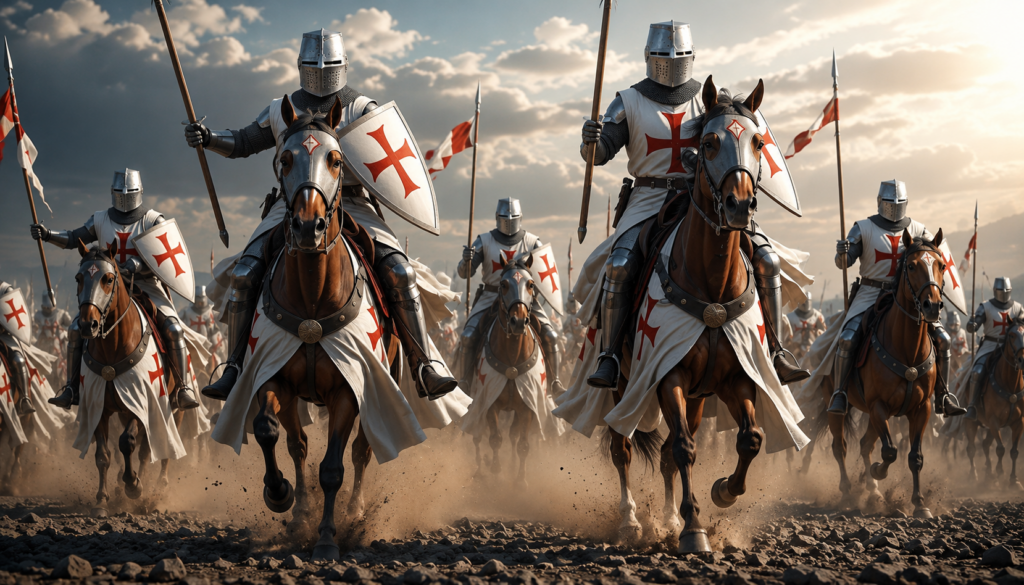
Long before the Knights Templar became famous across medieval Europe, another kind of warrior was already taking shape. He was not yet a member of a military order, nor did he wear the distinctive white mantle that later generations would associate with holy warfare. Instead, he emerged gradually from a turbulent world where churches, monasteries, pilgrims, and entire communities needed protection. This warrior became known by a simple yet powerful title: Miles Christi—the Soldier of Christ.
The rise of the Miles Christi did not happen overnight. It was the product of centuries of political instability, regional violence, and ecclesiastical reform. Between approximately 900 and 1100, Western Europe experienced profound changes. Kingdoms fragmented, local lords competed for power, and external threats from Vikings, Magyars, and Muslim raiders created an atmosphere of uncertainty. In many regions, bishops, abbots, and monastic communities found themselves responsible not only for spiritual leadership but also for the defense of lands, roads, and religious institutions.
A World in Need of Defenders
As the authority of kings weakened, local communities increasingly relied upon armed men for protection. Some served secular lords, while others entered into relationships with churches and monasteries. Documents from the period reveal a growing vocabulary of defense and obligation. Terms such as defensores (defenders), advocati (protectors), and custodes (guardians) appear alongside references to armed retainers who safeguarded ecclesiastical property and escorted travelers through dangerous territories.
The Church faced a dilemma. Warfare was often condemned when motivated by greed, ambition, or personal vengeance. Yet Christians still required protection. Monasteries held valuable lands, churches possessed sacred treasures, and pilgrims traveled increasingly dangerous roads. The question became whether military service could be transformed into a legitimate expression of Christian duty.
By the tenth and eleventh centuries, church leaders began developing a new answer. Through movements such as the Peace of God and the Truce of God, ecclesiastical authorities sought to restrain violence while redirecting the warrior class toward approved purposes. Knights and armed men were encouraged to defend the weak, protect churches, and preserve public order. Violence itself was not eliminated, but it was increasingly framed within moral and spiritual boundaries.
A World in Need of Defenders
This transformation produced a profound shift in identity. The ideal Christian warrior was no longer simply a fighter. He became a protector of sacred spaces and vulnerable people. Service to the Church could now be understood as a form of service to God. The concept of the Miles Christi provided a language through which military activity could be reconciled with Christian values.
Southern France became one of the most important laboratories for this development. Regions such as Provence and Languedoc contained dense networks of monasteries, bishoprics, castles, trade routes, and pilgrimage roads. The famous Abbey of Saint-Victor in Marseille and numerous ecclesiastical institutions maintained extensive landholdings that required both administration and protection. Charters from these regions reveal recurring references to military obligations, guardianship arrangements, and armed individuals operating within ecclesiastical spheres.
The Rise of the Miles Christi
The emergence of these relationships did not create formal military orders, but it established the social and institutional foundations upon which later orders would be built. Armed men increasingly interacted with religious communities through systems of patronage, service, protection, and obligation. Some defended church property. Others guarded roads, bridges, ports, and strategic locations essential to both commerce and pilgrimage.
Italy witnessed similar developments. In the fragmented political landscape of the Italian peninsula, bishops often exercised considerable secular authority. Ecclesiastical institutions possessed significant resources and frequently relied upon armed support. Networks of monasteries, churches, and local elites created environments where military service and religious obligation became closely intertwined.
By the late eleventh century, these regional developments converged with broader changes occurring throughout Christendom. Reform movements emphasized the moral responsibilities of the warrior class, while the growing pilgrimage culture highlighted the need for protection along major routes. The call for the First Crusade in 1095 would eventually accelerate these trends, providing new opportunities for Christian warriors to express their faith through military service.
Before the Templars
Yet the origins of the Miles Christi lay decades before the crusading era. The Soldier of Christ was not born on the battlefields of the Holy Land. He emerged gradually in the villages, monasteries, castles, and pilgrimage routes of medieval Europe. His identity was shaped by local needs, ecclesiastical reforms, and the practical realities of defending Christian communities.
When the Knights Templar were founded in the early twelfth century, they did not appear from nowhere. They inherited a world already familiar with the idea that military service could be dedicated to religious purposes. The Templars would refine, institutionalize, and internationalize this concept, but the foundations had been laid by generations of warriors who served as defenders of churches, guardians of pilgrims, and protectors of Christian society.
The story of the Miles Christi reminds us that history rarely begins with a single event. The famous military orders of the Crusading Age were the culmination of a much longer evolution. Before there were Templars, there were Soldiers of Christ—men whose service helped bridge the gap between the warrior and the monk, the sword and the cross.
Their legacy would shape medieval Europe for centuries to come.
Continue your readings of “The Miles Christi” articles here:
Related Articles
Oligamus Stella: How One Letter Changed History:
Miles Christi: Before the Templars and the Rise of the First Soldiers of Christ
Miles Christi Before the Templars: The Emergence of a Christian Military Identity: