Category: Military-religious development

  • The Rider at Saint-Victor

    The Rider at Saint-Victor

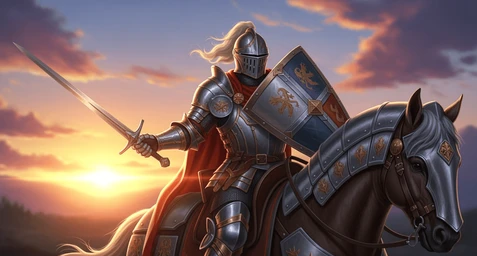
    The rider came out of the western dusk just as the bells of Saint-Victor began to ring.

    The sea winds of Provence carried the smell of salt and woodsmoke through the narrow roads leading toward Marseille. Beyond the monastery walls, the world was unsettled. Kingdoms rose and fell with alarming speed. Lords fought for land. Raiders crossed the sea. Pilgrims disappeared on lonely roads.

    Yet through the uncertainty, one thing remained constant: the Church endured.

    The rider urged his horse forward and looked toward the great abbey. Its stone towers stood against the fading sky like guardians of a different age. Monks moved behind the walls carrying lamps as evening prayers approached.

    He had traveled far.

    For weeks he had followed the roads of southern France, passing ruined watchtowers, isolated farms, and villages still recovering from generations of violence. Everywhere he went, people spoke of danger. Merchants traveled in groups. Priests feared the roads after dark. Farmers abandoned fields near disputed territories.

    Something was changing.

    The old order of Charlemagne had faded. The empire that once united much of western Europe had fractured into competing powers. Authority was scattered among local rulers, bishops, abbots, and ambitious nobles.

    Where law weakened, force filled the void.

    Yet in this chaos, new men were beginning to appear.

    Some served local lords.

    Others defended monasteries.

    Some escorted pilgrims.

    Others protected roads, bridges, and church lands.

    No single order bound them together. No grand rule governed their actions. Yet they shared a common purpose: to defend Christian communities in a dangerous world.

    The rider had heard whispers of them throughout his journey.

    Milites.

    Warriors.

    Protectors.

    Men who carried swords not merely for conquest, but for service.

    The idea was still young.

    Centuries would pass before military orders such as the Templars emerged. Yet the foundations were already being laid across Europe. In monasteries, bishoprics, frontier settlements, and contested territories, the relationship between faith and warfare was beginning to evolve.

    The rider dismounted outside the gates of Saint-Victor.

    A monk greeted him.

    “Peace be with you, traveler.”

    “And with you,” the rider replied.

    The monk noticed the dust of many roads upon the man’s cloak.

    “You have come far.”

    “I follow a trail.”

    The monk smiled.

    “Many do.”

    The rider looked toward the abbey church.

    “No,” he said quietly. “Not that kind of trail.”

    The monk raised an eyebrow.

    “What trail, then?”

    The rider stared toward the darkening horizon.

    “The forgotten paths.”

    For somewhere in the archives of Europe, hidden within fading charters and neglected manuscripts, lay the story of men who stood between chaos and order. Men whose names were largely forgotten but whose actions helped shape the medieval world.

    The search had begun.

    And Saint-Victor was only the first stop along the road.


    Continue your Pathfinder article readings here:

    Related Articles:

    Miles Christi: The Rise of the Soldiers of Christ (900-1100)

    Miles Christi Before the Templars: The Emergence of a Christian Military Identity

    Miles Christi: Before the Templars and the Rise of the First Soldiers of Christ

    The rider came out of the western dusk just as the bells of Saint-Victor began to ring.

    The sea winds of Provence carried the smell of salt and woodsmoke through the narrow roads leading toward Marseille.

    Beyond the monastery walls, the world was unsettled. Villages along the coast still carried the scars of raids and warfare.

    Watchfires burned on distant heights. Merchants traveled armed when they could afford protection, and pilgrims often vanished along the roads between the mountains and the sea.
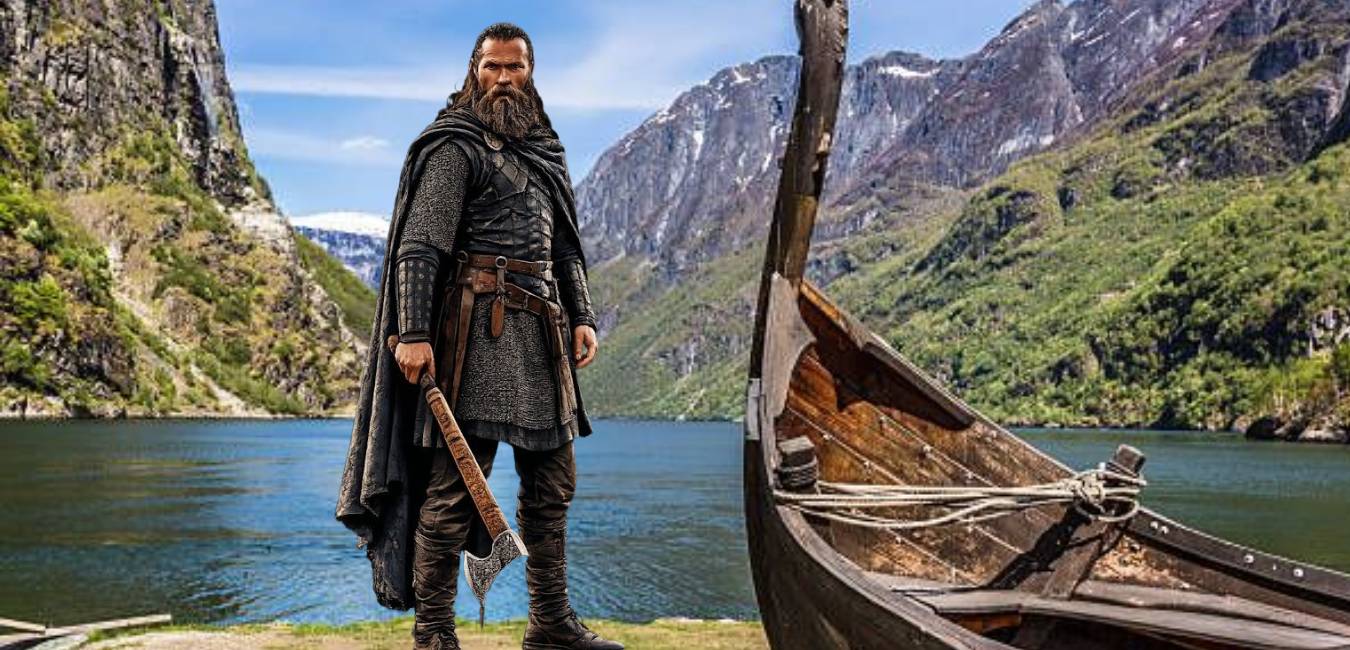

  • The Pathfinder: Following the Forgotten Roads of Medieval Europe

    The Pathfinder: Following the Forgotten Roads of Medieval Europe

    Many left behind no grand chronicles.

    Some survive only as fragments preserved in charters, inscriptions, ruined churches, coastal settlements, weathered runestones, or half-forgotten traditions embedded deep within the medieval landscape itself. Their world existed between kingdoms, between institutions, and often between memory and silence.

    For much of the medieval period, Europe was not a stable or unified civilization. It was fragmented, regional, and often dangerous. Coastal raiding, political instability, shifting alliances, and weak centralized authority created a world in which movement itself carried risk. Yet movement never ceased. Merchants crossed the seas. Pilgrims followed ancient routes toward shrines and holy cities. Monastic houses established networks that stretched across political borders. Scandinavian mariners connected the Baltic, the North Sea, the British Isles, and the river systems of Eastern Europe. Mediterranean ports remained tied to systems of trade and diplomacy inherited from older worlds.

    The roads of medieval Europe were not merely routes of travel. They were arteries of culture, faith, trade, war, and memory.

    The North Sea world demonstrates this particularly well. To modern eyes, the sea often appears as a barrier separating nations and peoples. In the medieval world, however, the sea frequently functioned as a highway. Scandinavian sailors, Frisian merchants, Anglo-Saxon traders, and continental communities moved across maritime corridors with surprising regularity. Coastal settlements developed sophisticated systems of navigation using landmarks, elevated terrain, harbor systems, river mouths, monasteries, beacon points, and tidal knowledge passed through generations.

    Even artificial landscapes became part of this navigational memory. In the Frisian and North Sea regions, terp and mound-building cultures constructed elevated settlements to survive flooding and shifting tidal conditions. These landscapes were not isolated rural curiosities. They formed part of a larger environmental system in which human movement, commerce, survival, and identity were interconnected with the sea itself.

    Long before the rise of famous military orders such as the Templars or Hospitallers, medieval societies already depended upon localized systems of defense, oath relationships, retinues, escorts, and warrior identities connected to both secular and ecclesiastical structures. Monasteries required protection. Pilgrimage routes required security. Ports and roads required stability in regions where royal authority could be inconsistent or distant.

    The military orders did not emerge from a vacuum.

    They developed within a much older world already familiar with the concepts of armed obligation, brotherhood, loyalty, mobility, and religious identity. The figure later known as the Miles Christi—the Soldier of Christ—did not suddenly appear in the twelfth century fully formed. The cultural and social foundations for such identities had been developing across Europe for generations.

    The Pathfinder follows these earlier traces.

    Sometimes they appear in monastic charters mentioning armed retainers or oath-bound groups. Sometimes they emerge from Scandinavian inscriptions commemorating travelers, merchants, or warriors who died abroad. Elsewhere they survive in fragmented coastal traditions, ecclesiastical corridors, forgotten fortifications, or corrupted lines of medieval Latin misunderstood by later generations.

    At times, the investigation enters the unstable territory where language itself reshaped memory.

    One of the clearest examples emerges in the ongoing study surrounding the phrase Nos Oligamus Stella, dux—a textual problem connected to medieval Naples and later historical interpretation. What later readers accepted as the name of a historical duke may instead preserve evidence of scribal mis-segmentation and linguistic corruption rooted in formulaic Latin. In such cases, the historical mystery is not merely about a person, but about how memory itself becomes distorted across centuries of copying, translation, and interpretation.

    History rarely disappears completely. More often, it survives in fragments waiting to be connected.

    A damaged inscription. A repeated formula in a charter. A forgotten place-name. A navigational corridor. A monastery positioned along a dangerous coastline. A runestone recording a death far from home. Individually, such fragments may appear insignificant. Together, they begin to reveal patterns hidden beneath the surface of traditional narratives.

    This is the world of The Pathfinder.

    Not the world of fantasy, but the world that existed between collapsing empires and rising institutions. A world of uncertain roads, shifting loyalties, maritime movement, monastic influence, regional brotherhoods, and fragile memory. It was a world held together not only by kings and armies, but also by countless unnamed individuals who crossed the dangerous spaces between political centers.

    The Pathfinder does not search for legends.

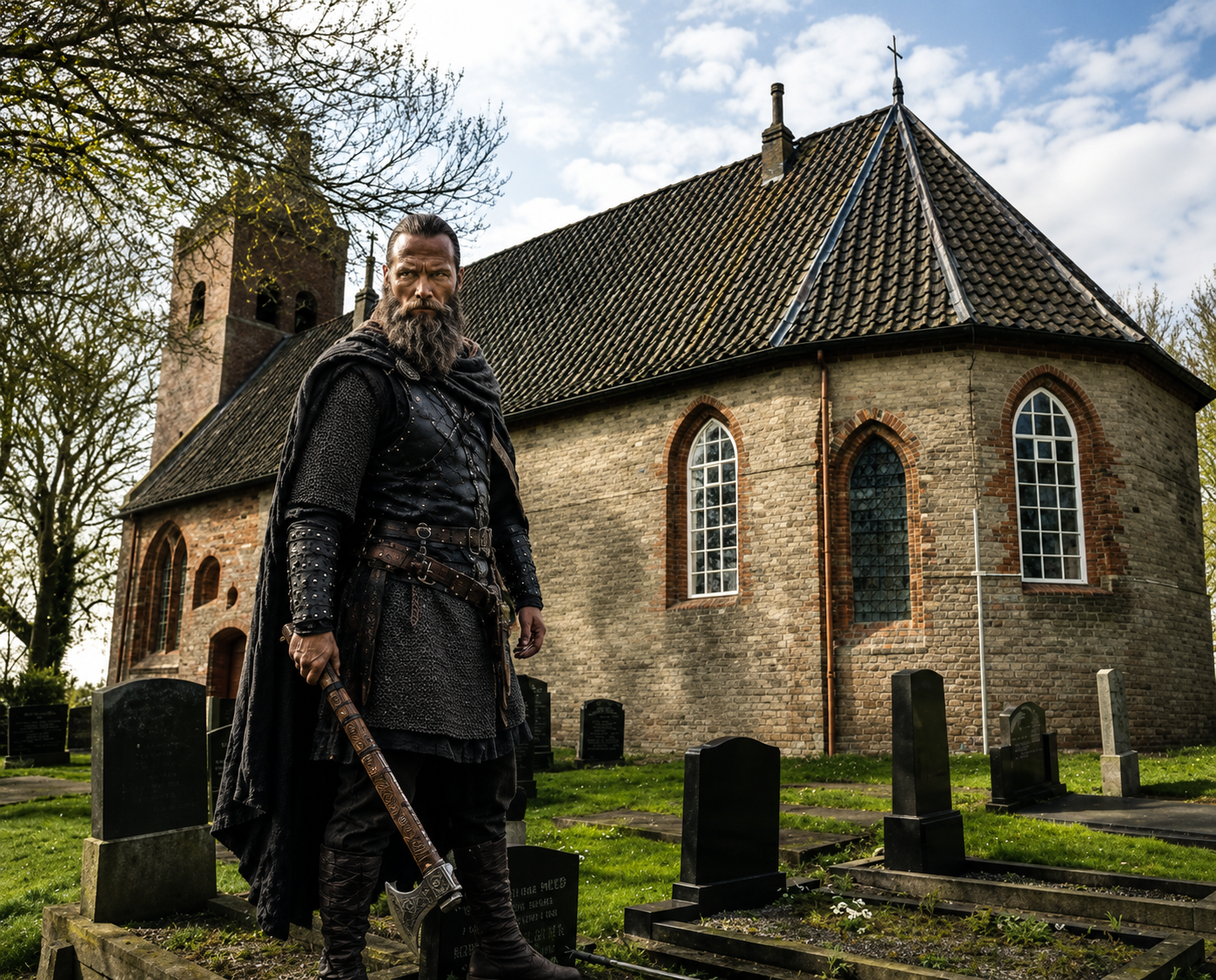
    He follows the places where history became fragmented: the roads between kingdoms, the coastlines between worlds, the forgotten brotherhoods that existed before institutions hardened into permanence, and the traces left behind by those who moved through the medieval world largely unseen by the chronicles that later defined it.


    Continue your reading journey with:

    The “Miles Christi” Series or The “Oligamus Stella” Series

    Return To Homepage

    Related Articles:

    Miles Christi: Before the Templars and the Rise of the First Soldiers of Christ

    Miles Christi: The Rise of the Soldiers of Christ (900-1100)

    Miles Christi Before the Templars: The Emergence of a Christian Military Identity

  • Miles Christi Before the Templars: The Emergence of a Christian Military Identity

    Miles Christi Before the Templars: The Emergence of a Christian Military Identity

    Author: Douglas Estill

    The Neapolis Forgotten Paths Project (2026)

    A World in Transition

    When most people hear the phrase Miles Christi—”Soldier of Christ”—their thoughts immediately turn to the Knights Templar, the Hospitallers, and the great military orders of the Crusading era. Popular history often presents these organizations as something entirely new: warrior-monks who suddenly appeared in the twelfth century to defend pilgrims and the Holy Land.

    The historical reality is far more interesting.

    Long before the Templars were founded in Jerusalem in 1119, the concept of the Christian warrior was already taking shape across medieval Europe. The military orders did not emerge from a vacuum. They were the culmination of centuries of social, religious, and political evolution that transformed how Christians viewed warfare, protection, and service to the Church.

    To understand the origins of the Templars, we must first travel back to a world where no military orders yet existed.

    A World in Transition

    The centuries following the collapse of the Carolingian Empire were marked by instability. Central authority weakened, regional lords competed for power, and communities often found themselves vulnerable to external threats and local violence. Monasteries, churches, roads, bridges, and pilgrims frequently required protection.

    The Church faced a difficult reality. Christian doctrine emphasized peace, yet the medieval world often demanded armed defense. This tension created a space in which new ideas about warfare and religious service began to emerge.

    Across southern France, northern Italy, and other regions of Europe, local warriors increasingly found themselves serving not only secular lords but also ecclesiastical institutions. Charters and cartularies reveal men defending church property, guarding monastic estates, escorting travelers, and protecting strategic routes. Their service was practical, but it was also beginning to acquire a spiritual dimension.

    These men were not Templars.

    They were not members of a military order.

    Yet they represented an important step in the development of a Christian military identity.

    The Meaning of Miles Christi

    The Latin phrase Miles Christi literally means “Soldier of Christ.”

    Early Christian writers often used the term metaphorically. The faithful were described as spiritual soldiers engaged in a struggle against sin and evil. The language was symbolic rather than military.

    By the tenth and eleventh centuries, however, the meaning began to evolve.

    As the Church sought ways to regulate violence and direct military power toward socially acceptable ends, the image of the Christian warrior gained new significance. Armed service performed in defense of the Church, the poor, pilgrims, or Christian communities could increasingly be viewed as a form of religious duty.

    The warrior’s sword was no longer seen solely as an instrument of secular power. Under certain circumstances, it could become a tool of protection and service.

    This transformation did not occur overnight. It emerged gradually through countless local arrangements, agreements, and relationships that linked armed men to ecclesiastical institutions.

    Southern France and the Sacred-Military Landscape

    Some of the clearest evidence for this transition appears in the documentary records of southern France.

    Throughout Provence and Languedoc, monasteries controlled extensive networks of land, roads, ports, and economic resources. These assets required protection. Local warriors often became associated with monastic communities, serving as defenders, guardians, or protectors.

    The surviving records reveal a landscape in which military service and religious authority increasingly intersected.

    This was not yet the world of the Crusades.

    Instead, it was a sacred-military ecology—a network of relationships connecting warriors, nobles, monasteries, bishops, and local communities. Within this environment, the foundations of the later military orders were quietly being laid.

    The emergence of the Miles Christi was not the creation of a single institution. It was the development of a new identity.

    Before the Templars

    When the Knights Templar eventually appeared in the early twelfth century, they did not invent the concept of the Christian warrior. Rather, they inherited and institutionalized ideas that had been developing for generations.

    The Templars provided organization, rules, and international structure. They transformed a growing tradition into a formal order recognized by the Church.

    Yet the roots of that tradition stretched back much further.

    They can be found in forgotten charters, monastic archives, local defense networks, and the countless men who served Christian communities long before anyone had heard of the Temple of Jerusalem.

    The story of the Miles Christi therefore begins not in the Holy Land, but in the villages, monasteries, and frontier regions of medieval Europe.

    It is a story of transformation.

    A story of how warriors became protectors.

    A story of how military service acquired spiritual meaning.

    And ultimately, a story of how the foundations were laid for one of the most influential developments in medieval history.

    The Templars would become famous.

    But the path that led to them began much earlier, with the emergence of a new idea—the Soldier of Christ.


    Continue your reading journey with:

    The “Pathfinder” Series or The “Oligamus Stella” Series

    Return To Homepage

    Related Articles:

    Oligamus Stella Meaning: The Phantom Founder Created by a Latin Error

    Oligamus Stella: Where Is Stella? Tracing the Real Place Behind the Medieval Misreading

    Miles Christi: Before the Templars and the Rise of the First Soldiers of Christ


  • Miles Christi: The Rise of the Soldiers of Christ (900-1100)

    Author: Douglas Estill

    The Neapolis Forgotten Paths Project (2026)

    A World Out Of Control

    Long before the Knights Templar became famous across medieval Europe, another kind of warrior was already taking shape. He was not yet a member of a military order, nor did he wear the distinctive white mantle that later generations would associate with holy warfare. Instead, he emerged gradually from a turbulent world where churches, monasteries, pilgrims, and entire communities needed protection. This warrior became known by a simple yet powerful title: Miles Christi—the Soldier of Christ.

    The rise of the Miles Christi did not happen overnight. It was the product of centuries of political instability, regional violence, and ecclesiastical reform. Between approximately 900 and 1100, Western Europe experienced profound changes. Kingdoms fragmented, local lords competed for power, and external threats from Vikings, Magyars, and Muslim raiders created an atmosphere of uncertainty. In many regions, bishops, abbots, and monastic communities found themselves responsible not only for spiritual leadership but also for the defense of lands, roads, and religious institutions.

    A World in Need of Defenders

    As the authority of kings weakened, local communities increasingly relied upon armed men for protection. Some served secular lords, while others entered into relationships with churches and monasteries. Documents from the period reveal a growing vocabulary of defense and obligation. Terms such as defensores (defenders), advocati (protectors), and custodes (guardians) appear alongside references to armed retainers who safeguarded ecclesiastical property and escorted travelers through dangerous territories.

    The Church faced a dilemma. Warfare was often condemned when motivated by greed, ambition, or personal vengeance. Yet Christians still required protection. Monasteries held valuable lands, churches possessed sacred treasures, and pilgrims traveled increasingly dangerous roads. The question became whether military service could be transformed into a legitimate expression of Christian duty.

    By the tenth and eleventh centuries, church leaders began developing a new answer. Through movements such as the Peace of God and the Truce of God, ecclesiastical authorities sought to restrain violence while redirecting the warrior class toward approved purposes. Knights and armed men were encouraged to defend the weak, protect churches, and preserve public order. Violence itself was not eliminated, but it was increasingly framed within moral and spiritual boundaries.

    A World in Need of Defenders

    This transformation produced a profound shift in identity. The ideal Christian warrior was no longer simply a fighter. He became a protector of sacred spaces and vulnerable people. Service to the Church could now be understood as a form of service to God. The concept of the Miles Christi provided a language through which military activity could be reconciled with Christian values.

    Southern France became one of the most important laboratories for this development. Regions such as Provence and Languedoc contained dense networks of monasteries, bishoprics, castles, trade routes, and pilgrimage roads. The famous Abbey of Saint-Victor in Marseille and numerous ecclesiastical institutions maintained extensive landholdings that required both administration and protection. Charters from these regions reveal recurring references to military obligations, guardianship arrangements, and armed individuals operating within ecclesiastical spheres.

    The Rise of the Miles Christi

    The emergence of these relationships did not create formal military orders, but it established the social and institutional foundations upon which later orders would be built. Armed men increasingly interacted with religious communities through systems of patronage, service, protection, and obligation. Some defended church property. Others guarded roads, bridges, ports, and strategic locations essential to both commerce and pilgrimage.

    Italy witnessed similar developments. In the fragmented political landscape of the Italian peninsula, bishops often exercised considerable secular authority. Ecclesiastical institutions possessed significant resources and frequently relied upon armed support. Networks of monasteries, churches, and local elites created environments where military service and religious obligation became closely intertwined.

    By the late eleventh century, these regional developments converged with broader changes occurring throughout Christendom. Reform movements emphasized the moral responsibilities of the warrior class, while the growing pilgrimage culture highlighted the need for protection along major routes. The call for the First Crusade in 1095 would eventually accelerate these trends, providing new opportunities for Christian warriors to express their faith through military service.

    Before the Templars

    Yet the origins of the Miles Christi lay decades before the crusading era. The Soldier of Christ was not born on the battlefields of the Holy Land. He emerged gradually in the villages, monasteries, castles, and pilgrimage routes of medieval Europe. His identity was shaped by local needs, ecclesiastical reforms, and the practical realities of defending Christian communities.

    When the Knights Templar were founded in the early twelfth century, they did not appear from nowhere. They inherited a world already familiar with the idea that military service could be dedicated to religious purposes. The Templars would refine, institutionalize, and internationalize this concept, but the foundations had been laid by generations of warriors who served as defenders of churches, guardians of pilgrims, and protectors of Christian society.

    The story of the Miles Christi reminds us that history rarely begins with a single event. The famous military orders of the Crusading Age were the culmination of a much longer evolution. Before there were Templars, there were Soldiers of Christ—men whose service helped bridge the gap between the warrior and the monk, the sword and the cross.

    Their legacy would shape medieval Europe for centuries to come.


    Continue your readings of “The Miles Christi” articles here:


    Related Articles

    Oligamus Stella: How One Letter Changed History:

    Miles Christi: Before the Templars and the Rise of the First Soldiers of Christ

    Miles Christi Before the Templars: The Emergence of a Christian Military Identity:

  • Miles Christi: Before the Templars and the Rise of the First Soldiers of Christ

    Author: Douglas Estill

    The Neapolis Forgotten Paths Project (2026)

    Miles Christi—the Soldier of Christ.

    When most people think of medieval warrior-monks, they immediately picture the Knights Templar.

    The white mantles, the red crosses, the crusading armies, and the legends that have survived for nearly a thousand years have made the Templars one of the most recognizable organizations in history. Yet a fascinating question remains.

    What if the Templars were not the beginning?

    What if the idea of a Christian warrior dedicated to the defense of the Church existed long before the first Templar took his vows?

    The deeper we investigate medieval Europe, the more evidence suggests that the Templars did not emerge from a vacuum. Instead, they inherited a tradition that had been developing for generations. Before there were military orders, there were men who defended churches, protected monasteries, guarded pilgrims, and served as armed protectors of Christian communities. Medieval documents increasingly describe these individuals using a remarkable title: Miles Christi—the Soldier of Christ.

    To understand their story, we must travel back to a Europe that was very different from the one we often imagine.

    Between the ninth and eleventh centuries, much of Western Europe existed in a state of uncertainty. Political authority was fragmented. Regional lords competed for influence. Viking raids had scarred coastlines and river systems. Trade routes were vulnerable, and many communities depended upon local arrangements for protection.

    Monasteries and churches often found themselves on the front lines of this unstable world. They controlled land, maintained roads, cared for the poor, and served as centers of local authority. Yet they also possessed wealth that made them attractive targets for thieves, raiders, and rival nobles.

    As a result, ecclesiastical institutions increasingly relied upon armed men for protection.

    These warriors did not belong to formal military orders. They were local nobles, retainers, mounted fighters, and defenders who entered into relationships with bishops, abbots, and religious communities. Their role was practical. They protected church lands, escorted travelers, secured strategic locations, and helped preserve stability in regions where centralized authority was often weak.

    Over time, something remarkable happened.

    The Church began to reshape how warfare itself was understood.

    Movements such as the Peace of God and the Truce of God sought to limit violence while encouraging warriors to direct their strength toward acceptable purposes. Fighting for personal gain remained suspect, but defending the weak, protecting churches, and preserving Christian society increasingly became viewed as honorable obligations.

    This transformation produced a new ideal.

    The warrior was no longer simply a fighter.

    He could become a servant of God.

    The phrase Miles Christi reflected this emerging identity. It carried both military and spiritual meaning. A man could wield a sword while simultaneously believing that his service fulfilled a religious purpose. He stood at the intersection of faith and warfare, embodying a concept that would eventually become one of the defining features of medieval Christendom.

    Southern France provides some of the clearest examples of this development.

    Throughout Provence and Languedoc, monasteries, castles, pilgrimage routes, and commercial centers formed interconnected networks that required protection. Cartularies and charters from the region reveal repeated references to military obligations, guardianship arrangements, and armed individuals operating within ecclesiastical spheres.

    These documents rarely describe organized military orders. Instead, they reveal a world in which religious institutions and local warriors worked together through evolving systems of protection, patronage, and service.

    The same pattern appears elsewhere.

    Across Italy, bishops frequently exercised both spiritual and temporal authority. Monastic communities relied upon local defenders. Strategic roads, bridges, ports, and settlements required protection. In many regions, armed service became intertwined with ecclesiastical interests long before the appearance of the Templars.

    What emerges from the evidence is not a single organization but a broader cultural transformation.

    The idea of the Christian warrior was taking shape.

    By the late eleventh century, pilgrimage had become increasingly important throughout Europe. Thousands of travelers journeyed toward sacred destinations. At the same time, reform movements within the Church continued to emphasize moral discipline and the responsibilities of the warrior class.

    These developments created fertile ground for a revolutionary concept: a permanent institution dedicated to combining military service with religious devotion.

    When the Knights Templar appeared in the early twelfth century, they represented the culmination of centuries of evolution rather than a sudden innovation. They formalized what had previously existed in scattered and localized forms. The Templars gave structure, rules, and international organization to an idea that had already been growing across Europe.

    The Soldier of Christ did not begin in Jerusalem.

    He was born in the villages, monasteries, castles, roads, and frontier regions of medieval Europe.

    Long before the Templars became famous, countless unnamed warriors were already defending churches, safeguarding pilgrims, and serving religious communities. Their names rarely appear in modern history books, yet they laid the foundation for one of the most influential institutions of the Middle Ages.

    The story of the Miles Christi reminds us that history often begins long before anyone notices.

    The Templars may have become the most famous Soldiers of Christ, but they were not the first.

    They were heirs to a tradition already centuries in the making.


    Continue your readings of “The Miles Christi” articles here:

    Related Articles

    Miles Christi: The Rise of the Soldiers of Christ (900-1100):

    Oligamus Stella Reconsidered: How Mis-Segmentation Created a Phantom Figure:

    Oligamus Stella: How One Letter Changed History:

  • “Oligamus Stella: Where Is Stella? Tracing the Real Place Behind the Medieval Error”

    Author: Douglas Estill

    The Neapolis Forgotten Paths Project (2026)

    Tracing the Medieval Error

    In our previous investigation, we uncovered a startling possibility.

    The mysterious medieval duke known as Oligamus Stella may never have existed at all.

    A thousand-year-old scribal misunderstanding appears to have transformed an ordinary legal formula into the name of a man. What generations accepted as a historical figure may have been nothing more than a copying error repeated through the centuries.

    Yet solving one mystery only created another.

    If Oligamus was not a person, what about Stella?

    The word remained.

    And words, especially in medieval records, rarely appear without a reason.

    The Pathfinder had removed the phantom duke from the story, but the trail itself had not disappeared.

    It had merely changed direction.


    Most historical investigations begin with people.

    This one began with a place.

    Throughout medieval Europe, names evolved in countless ways. Villages became surnames. Landmarks became family identities. Geographic locations attached themselves to noble houses, monasteries, and local rulers.

    When researchers encounter a recurring place-name, the obvious question is simple:

    Where was it?

    The challenge, however, is that medieval geography rarely cooperates.

    Names changed.

    Languages shifted.

    Borders moved.

    Entire settlements disappeared.

    A place recorded in a medieval charter may survive today under a completely different name—or may have vanished from the landscape altogether.

    Tracing such locations often requires following centuries of scattered clues.

    That is precisely what happened with Stella.


    At first glance, Stella seems straightforward enough.

    The Latin word means “star.”

    Many historians naturally assumed that the term referred to a symbolic title, a family designation, or perhaps even a poetic nickname.

    Yet the documentary evidence suggested something different.

    As records from southern France and northern Italy were examined, references began to emerge that pointed not toward a symbolic star but toward an actual geographic location.

    The name appeared in connection with individuals tied to a specific corridor stretching through Provence.

    Again and again, traces surfaced in areas connected by medieval roads, ecclesiastical networks, and noble families whose movements can still be reconstructed from surviving documents.

    What initially appeared to be a personal name increasingly resembled a place-name.

    And that changed everything.


    The deeper the investigation progressed, the clearer the pattern became.

    Names associated with Stella appeared near strategic routes linking the Mediterranean coast to the interior of Provence.

    These were not random locations.

    They sat along pathways used by merchants, pilgrims, soldiers, church officials, and local nobility.

    For centuries, this region served as a crossroads where cultures, languages, and political powers intersected.

    Every road carried travelers.

    Every monastery preserved records.

    Every charter left behind fragments of a larger story.

    The Pathfinder followed those fragments from archive to archive, document to document, searching for evidence that could explain why the name Stella continued to appear long after the phantom duke himself dissolved under scrutiny.

    The answer seemed increasingly geographical rather than personal.


    As with many medieval mysteries, certainty remained elusive.

    No single document emerged declaring, “This is Stella.”

    History rarely offers such convenient solutions.

    Instead, investigators must weigh probabilities, compare patterns, and evaluate competing explanations.

    Yet one conclusion became difficult to ignore.

    The evidence increasingly suggested that Stella originated not as a forgotten duke but as a real location embedded within the medieval landscape of Provence.

    What later generations interpreted as part of a personal name may actually have preserved the memory of a place.

    A place whose significance had long since faded from common knowledge.


    The implications are profound.

    For centuries, researchers searched for a man.

    They debated his identity, speculated about his ancestry, and attempted to place him within medieval political history.

    But if the evidence points toward a location rather than an individual, then historians have been asking the wrong question all along.

    The mystery was never, “Who was Oligamus Stella?”

    The real question was:

    “Where was Stella?”

    By shifting the investigation from person to place, an entirely new landscape emerges.

    Road networks.

    Noble families.

    Monastic connections.

    Settlement patterns.

    Political frontiers.

    What appeared to be a biography transforms into a geographic investigation spanning centuries.


    Yet the story does not end here.

    Finding Stella is only one piece of a much larger puzzle.

    If a scribal error created the phantom duke, and if Stella was actually a place, then another question immediately follows.

    How did this mistake survive for nearly a thousand years?

    Who repeated it?

    Why did no one notice?

    And what does that reveal about the way history itself is transmitted from one generation to the next?

    The Pathfinder’s search continues.

    Because sometimes the greatest mysteries are not hidden in lost cities or forgotten castles.

    Sometimes they are hidden in plain sight, preserved within a single misunderstood word.

    And sometimes, after a thousand years, that word still has a story to tell.


    Continue your reading of the “Oligamus Stella” articles here:


    Related Articles

    Miles Christi: Before the Templars and the Rise of the First Soldiers of Christ:

    Miles Christi: The Rise of the Soldiers of Christ (900-1100):

    Oligamus Stella Reconsidered: How Mis-Segmentation Created a Phantom Figure: