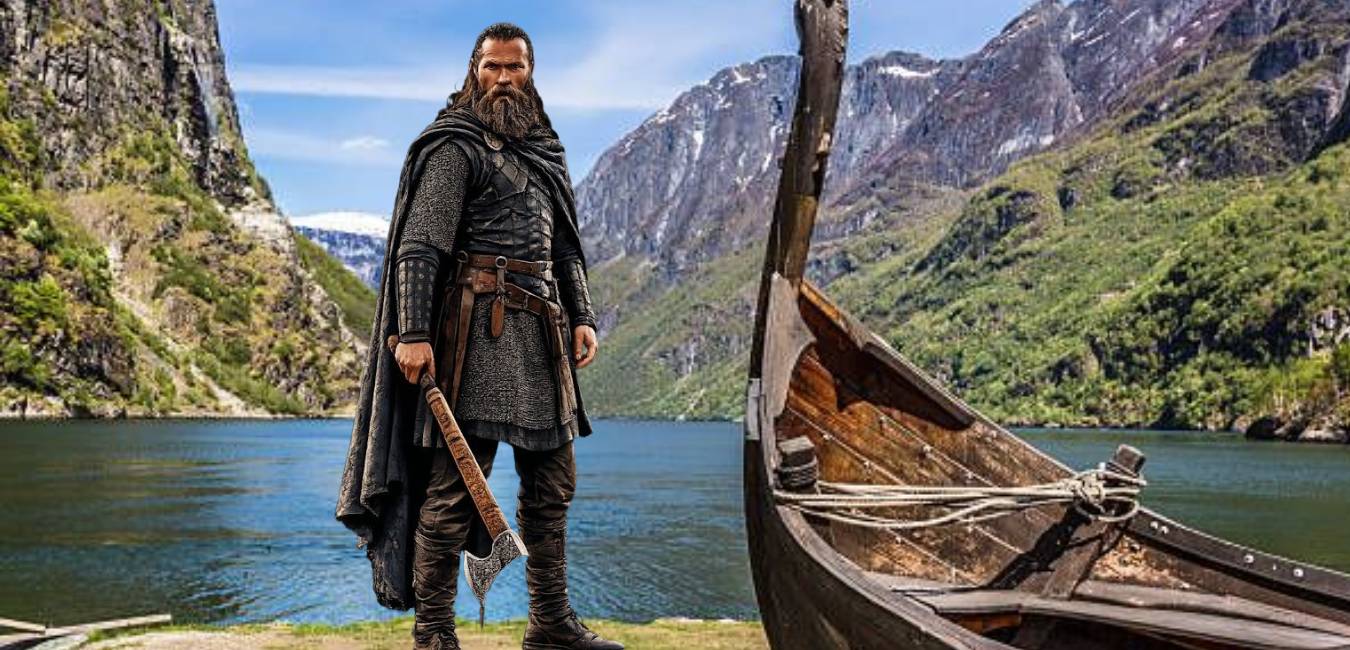

Many left behind no grand chronicles.
Some survive only as fragments preserved in charters, inscriptions, ruined churches, coastal settlements, weathered runestones, or half-forgotten traditions embedded deep within the medieval landscape itself. Their world existed between kingdoms, between institutions, and often between memory and silence.
For much of the medieval period, Europe was not a stable or unified civilization. It was fragmented, regional, and often dangerous. Coastal raiding, political instability, shifting alliances, and weak centralized authority created a world in which movement itself carried risk. Yet movement never ceased. Merchants crossed the seas. Pilgrims followed ancient routes toward shrines and holy cities. Monastic houses established networks that stretched across political borders. Scandinavian mariners connected the Baltic, the North Sea, the British Isles, and the river systems of Eastern Europe. Mediterranean ports remained tied to systems of trade and diplomacy inherited from older worlds.
The roads of medieval Europe were not merely routes of travel. They were arteries of culture, faith, trade, war, and memory.
The North Sea world demonstrates this particularly well. To modern eyes, the sea often appears as a barrier separating nations and peoples. In the medieval world, however, the sea frequently functioned as a highway. Scandinavian sailors, Frisian merchants, Anglo-Saxon traders, and continental communities moved across maritime corridors with surprising regularity. Coastal settlements developed sophisticated systems of navigation using landmarks, elevated terrain, harbor systems, river mouths, monasteries, beacon points, and tidal knowledge passed through generations.
Even artificial landscapes became part of this navigational memory. In the Frisian and North Sea regions, terp and mound-building cultures constructed elevated settlements to survive flooding and shifting tidal conditions. These landscapes were not isolated rural curiosities. They formed part of a larger environmental system in which human movement, commerce, survival, and identity were interconnected with the sea itself.
Long before the rise of famous military orders such as the Templars or Hospitallers, medieval societies already depended upon localized systems of defense, oath relationships, retinues, escorts, and warrior identities connected to both secular and ecclesiastical structures. Monasteries required protection. Pilgrimage routes required security. Ports and roads required stability in regions where royal authority could be inconsistent or distant.
The military orders did not emerge from a vacuum.
They developed within a much older world already familiar with the concepts of armed obligation, brotherhood, loyalty, mobility, and religious identity. The figure later known as the Miles Christi—the Soldier of Christ—did not suddenly appear in the twelfth century fully formed. The cultural and social foundations for such identities had been developing across Europe for generations.
The Pathfinder follows these earlier traces.
Sometimes they appear in monastic charters mentioning armed retainers or oath-bound groups. Sometimes they emerge from Scandinavian inscriptions commemorating travelers, merchants, or warriors who died abroad. Elsewhere they survive in fragmented coastal traditions, ecclesiastical corridors, forgotten fortifications, or corrupted lines of medieval Latin misunderstood by later generations.
At times, the investigation enters the unstable territory where language itself reshaped memory.
One of the clearest examples emerges in the ongoing study surrounding the phrase Nos Oligamus Stella, dux—a textual problem connected to medieval Naples and later historical interpretation. What later readers accepted as the name of a historical duke may instead preserve evidence of scribal mis-segmentation and linguistic corruption rooted in formulaic Latin. In such cases, the historical mystery is not merely about a person, but about how memory itself becomes distorted across centuries of copying, translation, and interpretation.
History rarely disappears completely. More often, it survives in fragments waiting to be connected.
A damaged inscription. A repeated formula in a charter. A forgotten place-name. A navigational corridor. A monastery positioned along a dangerous coastline. A runestone recording a death far from home. Individually, such fragments may appear insignificant. Together, they begin to reveal patterns hidden beneath the surface of traditional narratives.
This is the world of The Pathfinder.
Not the world of fantasy, but the world that existed between collapsing empires and rising institutions. A world of uncertain roads, shifting loyalties, maritime movement, monastic influence, regional brotherhoods, and fragile memory. It was a world held together not only by kings and armies, but also by countless unnamed individuals who crossed the dangerous spaces between political centers.
The Pathfinder does not search for legends.
He follows the places where history became fragmented: the roads between kingdoms, the coastlines between worlds, the forgotten brotherhoods that existed before institutions hardened into permanence, and the traces left behind by those who moved through the medieval world largely unseen by the chronicles that later defined it.
Continue your reading journey with:
The “Miles Christi” Series or The “Oligamus Stella” Series
Return To Homepage
Related Articles:
Miles Christi: Before the Templars and the Rise of the First Soldiers of Christ
Miles Christi: The Rise of the Soldiers of Christ (900-1100)
Miles Christi Before the Templars: The Emergence of a Christian Military Identity